
There were two contrasting sources of inspiration behind this next story. The first was the extraordinary run of weather events that marked the start of this year. Devastating bushfires, flooding rains and blistering heatwaves — all experienced across different parts of the country in just the first two weeks of January.
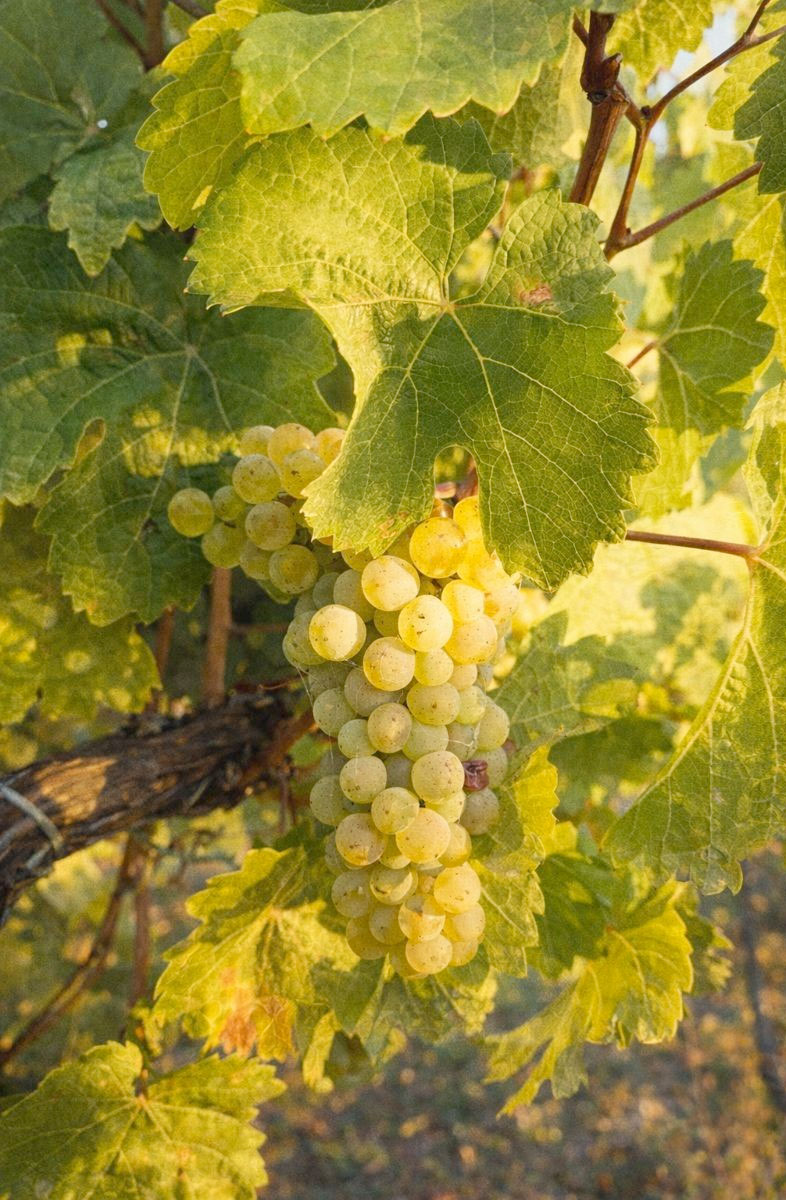
It was during the latter of these events — an oppressive heatwave that pushed near-record temperatures as far east as Sydney’s beaches — that I found some quiet solace one evening with a glass of our award-winning 2025 Canberra District Riesling. Enjoying the refreshingly crisp coolness of the wine, I was prompted to reflect on the unlikely (and, in hindsight, rather amusing) story of its origin, and that of our Riesling vineyard in Gundaroo.
This is a story my mum particularly loves — one she insists I tell whenever enough of us gather around the dinner table. It’s a little longer than previous editions of The Love of Wine, but perfectly suited to a long weekend. Enjoy!
By 2017, with a number of vintages from the Gundaroo vineyard and the broader Canberra District under our belt, we were learning what did — and didn’t — work, not only in winemaking but also in viticulture. With its ancient pre-Cambrian clay loams resting over an expansive limestone bedrock, the region’s strongest synergies clearly lay with Riesling and Shiraz. With our vineyard planted to Chardonnay and Cabernet Sauvignon, we felt neither variety was particularly well suited to the site and finally made the decision to graft the vines.
I’ve always been amazed by the grafting process. Despite the somewhat miraculous outcome — and the immense skill required to do it properly — the premise is fairly straightforward: take a cutting from one plant (of the same species) and graft a single bud, via a scion incision, into the top-lopped trunk of another. This allows growers to pair different cropping varieties with rootstocks selected for specific traits, such as disease resistance, drought tolerance, or protection against pests like Phylloxera.
In an established vineyard like ours, the advantage is obvious. The newly grafted variety immediately benefits from the existing vine’s root system and trunk, fast-tracking it through what would otherwise be a slow — and largely fruitless (forgive the pun) — establishment period of three to five years. A costly wait if planting rootlings instead.
We mapped out and budgeted the process before locating a supplier for the Riesling cuttings — a nursery just across the Victorian border in South Australia’s expansive Riverland region. By late 2018, I was spending more time in Gundaroo preparing the vineyard for grafting when Dad suggested that, rather than having the cuttings couriered, we could take a road trip.
Eager for an excuse to explore the countryside and cross the legendary Hay Plains, I agreed enthusiastically.
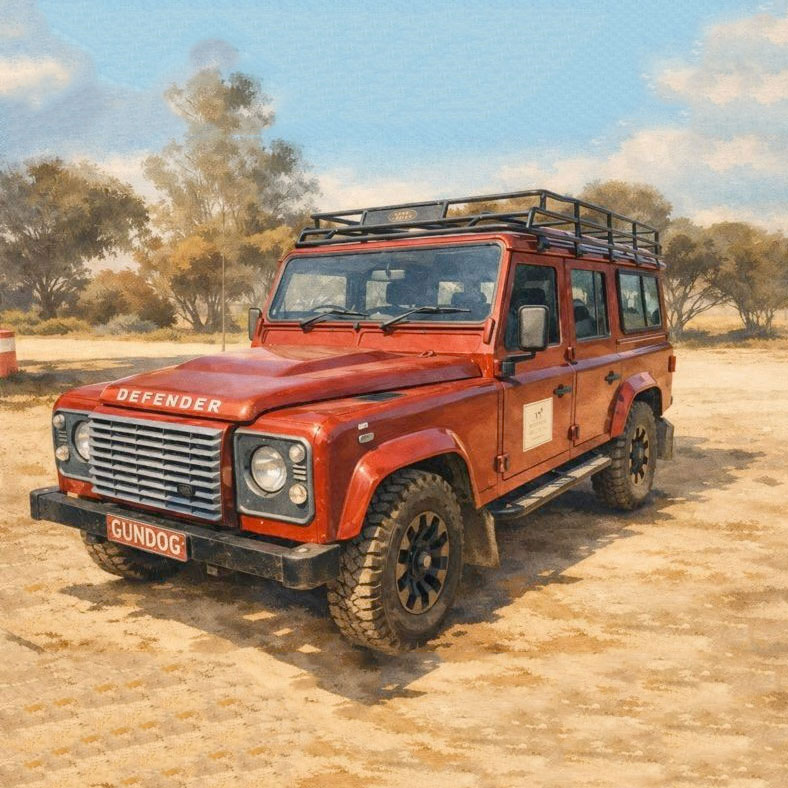
Having promptly dismissed the idea of taking my more comfortable SUV as entirely unnecessary, I also agreed — perhaps foolishly — to a long, hot, ten-hour drive across the plains in Dad’s Land Rover Defender. Still, the promised reward of dinner at the cult favourite Stefano’s Restaurant in Mildura was enough to get me over the line.
My expectations were quickly realised as the sun climbed on the first day of our journey. Several years into a protracted drought and still under the influence of an El Niño climate system, conditions were hot and dry to say the least. By the time we passed Wagga Wagga, the sun was beating down and the Defender’s air-conditioning was struggling to keep up.
And while I love the unique character of the Defender, its mechanical shortcomings didn’t help. Clunky gear changes, sluggish acceleration and a tendency to tramline all over the road on its oversized off-road tyres (which I later discovered were effectively bald) made overtaking enormous eighteen-wheeler road trains a life-affirming experience. Each successful manoeuvre was met with an audible sigh of relief from me, and a nonchalant, ‘You see — nothing to worry about!’ from Dad.
On the occasions I reluctantly consented to him taking a turn behind the wheel, Dad demonstrated his unshakeable faith in both the Defender and himself by steering one-handed while engaging in face-to-face conversation — the hearing in his left ear wasn’t great — even though my eyes were firmly fixed on the road ahead, exactly where his should have been.
So it was with a disproportionate level of excitement that we arrived at a solitary service station in Hay, midway across the dry, desolate plains.
While I headed straight for the fridge of cold water, I soon found Dad mumbling and shaking his head as he roamed the aisles.
‘Are you OK, Dad?’
‘No. This is ridiculous!’ He was clearly flustered.
‘And what’s that?’ I asked.
‘There’s no damn coffee machine!’
Taking in the modest, slightly rundown appearance of the place — and given we were literally in the middle of a desert, hundreds of kilometres from any major town — I couldn’t help but chuckle.
His hurried exit back to the car, Dare Double Shot Iced Coffee in hand, meant we left earlier than we should have. The bugs remained plastered across the windscreen, and we forgot to top up the fuel — something we’d agreed to do at every opportunity.
About thirty minutes into the final leg of the drive, I noticed the fuel gauge had dropped alarmingly. Dad then revealed that a more rapid descent of the needle once it fell below halfway was another “quirk” of the vehicle.
Dispensing another, ‘It’ll be fine, don’t worry,’ he seemed unmoved — and still mildly irritated by the iced coffee in his hand.
Another fifteen minutes passed and the red light came on.
I took a deep breath. ‘Dad, how far to the next town?’
With no mobile coverage — of course — and no Google Maps, he gave me a knowing smile and retrieved the folded paper map from the glovebox that I’d earlier mocked him for packing.
‘Lucky I brought this,’ he said. Touché.
After some audible calculations involving speed, distance and time, he announced we were midway between Hay and Balranald — about sixty kilometres away.
‘Jesus, Dad. Sixty kilometres on red. There’s no way we’ll make it.’
Now unsettlingly quiet, Dad folded the map and opened the glovebox again. I glimpsed the dust-covered owner’s manual.
‘Dad, get that out. Check the section on fuel warning lights.’
Silently, he complied.
‘It says here the range is good — and you’ll love this — for sixty kilometres from when the light first comes on. Depending on driving conditions, of course.’
Satisfied, he closed the manual.
‘And Dad,’ I said, ‘what driving conditions do you think they mean?’
He didn’t reply.
I slowed down, held the car in sixth gear, turned off the A/C and accepted our situation. At least it spared us from more death-defying overtakes. Following Dad’s lead, I attempted to relax by taking in the passing scenery.
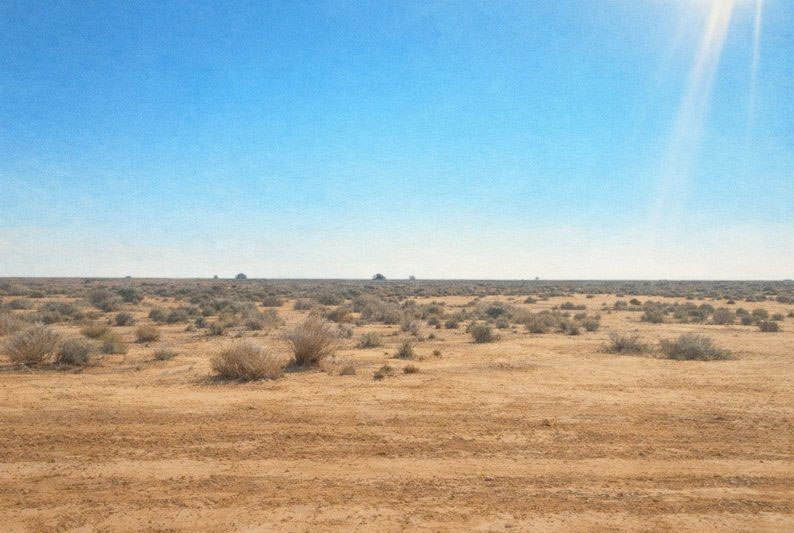
The first thing that strikes you about the Hay Plains is the sheer scale. One of the flattest places on Earth, it’s hard not to feel humbled by its vastness — a vivid reminder of both the immensity of our continent and the harshness of its interior.
At times the horizon feels endless in every direction. Few shrubs. Fewer trees. Little visible wildlife beyond the occasional roadkill. The sky glows with an austere intensity that turns the soil beneath it a lifeless grey.
Yet despite the apparent hostility, this region remains one of Australia’s agricultural epicentres. I watched enormous tractors plough desiccated fields, throwing up clouds of dust, and wondered how anything could grow here. The answer lay just out of view from the highway — the snaking path of the Murrumbidgee River, winding its way across the plains toward the Murray.
Aside from infrequent rainfall — barely 330 millimetres a year — this river is the single source of life-giving water local farmers rely on. Our approach to agriculture here seems to ignore that scarcity. Behind man-made levee banks sit immense fields of rice and cotton — two of the most water-intensive crops — serviced by flood and furrow irrigation systems that lose almost as much to the sun as they give to the soil. Mighty pumps draw so much water they can even reverse the river’s flow.
Closer to the junction of the Murrumbidgee and Murray, the scale intensifies again. Almonds now dominate — more than 45,000 hectares of them — having overtaken grapes as the region’s most significant crop. They require extraordinary volumes of water: around twelve million litres per hectare, or roughly eight litres for every single almond grown.
Confronted by the immensity of these farms and the unsuitability of their crops in such searing heat and aridity, I couldn’t help questioning the sustainability of it all. How did this ever come to be?
Images came to mind of ancient rivers pumped toward oblivion, the destruction of ecosystems that once flourished along their banks, and our greed in drawing so heavily from their waters. It left me with a deep sense of sadness.
Fortunately, the mood lifted as we rolled — or perhaps puttered — into Balranald. We must have had a tailwind, because the tank took four litres more than its stated capacity. After a much-needed break, I was keen to finish the final two-hour drive to Mildura. Emotionally and physically drained, I craved comfort, even though I knew this journey would stay with me.
The prosperity of Mildura was immediately evident in the water running down its gutters, spilling from vast irrigated fields. This time it was table grapes, sprinkled by huge overhead irrigators. By then, I was too tired to be annoyed by the waste.
After checking into our motel rooms and showering, Dad and I made our way to Stefano’s. Beneath the low ceilings of what was once an underground cellar, I surrendered to five courses of the most comforting Italian food I can remember eating. There was no menu — just our enthusiastic consent to let Stefano feed us as he chose. The sommelier guided us through a range of Italian wines, highlighted by a very special Barolo.
As much as I wanted to forget the drive, I couldn’t help smiling at the absurd contrast of the day.
The remainder of the trip passed with minimal drama — a short drive to the nursery, another night in Mildura (pub dinner this time), and then the long return across the plains.
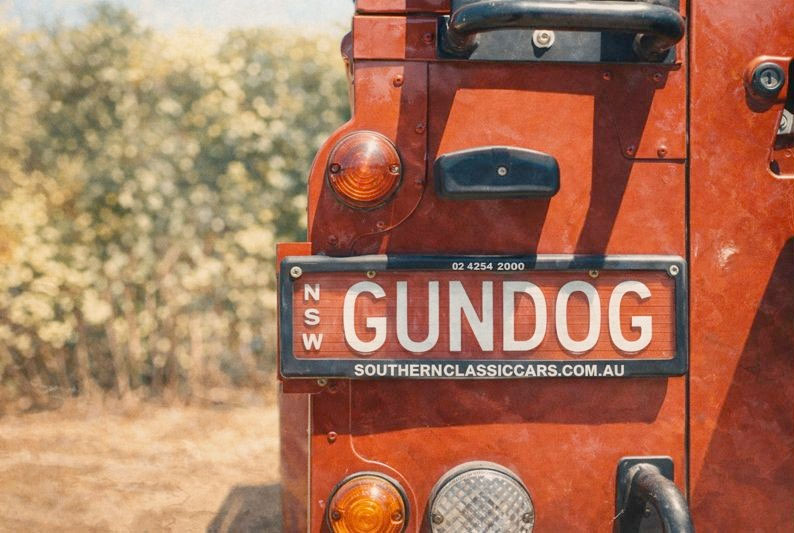
To spread the load — in both time and cost — we planned to complete the grafting over two years. So yes, dear reader, we made the same journey again the following year. We didn’t have to — a courier could easily have delivered the cuttings — but clearly our memories of Stefano’s were enough to lure us back. Perhaps, too, we simply enjoyed the time together, in that father-and-son way.
Proudly showing off the new tyres he’d bought for the Defender, Dad once again took the wheel. Given what we’d survived the year before, I’d grown strangely fond of the vehicle despite its shortcomings in comfort, performance and, frankly, safety.
However, even before we set off, stress levels were high. Two planned departures had already been cancelled due to warnings of catastrophic fire conditions — this was just before the Black Summer bushfires took hold — and I wanted to stay close to home in case fires threatened the Hunter or Gundaroo. When a brief reprieve arrived, we seized it.
The southward journey was even hotter than the year before — dangerously so. The temperature reached forty-five degrees. I drank bottle after bottle of water and tried every combination of windows, air-conditioning and fan speed. Nothing worked. Pulling into that same service station felt like finding an oasis.
For a moment, I thought I was hallucinating. There, occupying the very counter where we’d paid for our drinks the year before, stood an immense triple-group head coffee machine.
‘Dad!’ I called. ‘You can finally get that long black you’ve been dreaming about!’
He surveyed the flashing LED striplight running the back of the machine and replied simply, ‘Nice. But I’ll just get this,’ placing a Dare Double Shot Iced Coffee on the counter.
I lost it — doubled over in laughter as the woman behind the till looked on, utterly bemused.
The remainder of the drive into Mildura was uneventful, though the landscape somehow appeared even drier than before. Stefano once again delivered a memorable evening, but my recollections blur together — compressed by fatigue and a growing urgency to get home.
The news was filled with stories of worsening fires. On the second day of our trip — the leg into South Australia and back — another forecast for catastrophic conditions was issued for north-east Victoria, including Mildura. We decided to leave early the next morning, hoping to stay ahead of the weather.
As the morning progressed, strong westerly winds picked up. By the time we passed our favourite truck stop, conditions were horrendous. The temperature climbed toward forty degrees, and violent gusts whipped up dust clouds so thick it was hard to see beyond the bonnet. When it wasn’t dust, it was the bushfire smoke now smothering much of NSW. The sun became a dull red disc, and the landscape felt truly apocalyptic.
Near Narrandera, phone reception returned just long enough to check the Fires Near Me app. Every map tile was littered with hazard icons. We zoomed in and out, reading labels — out of control, advice, contained — trying to predict the next few hours. I remember thinking, how does anything even burn out here? But that year, almost anything that could, did.
Fortunately, our calculations held. Lady Luck smiled on the Land Rover, and after ten long, hot hours we made it back to Gundaroo intact.
While I don’t feel entirely unscathed — the environmental impact was confronting and the fires traumatic in their own right — those journeys were undoubtedly entertaining, enlightening and life-affirming. Two road trips I’ll remember fondly for the rest of my days.
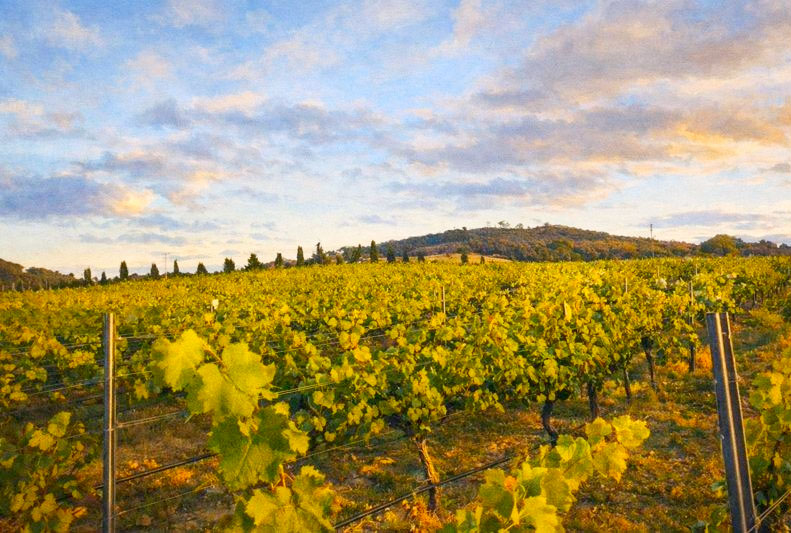
Several years on, I’m pleased to report that the Riesling cuttings we brought back from the Riverland have taken to their hosts as if they were always meant to be there. They now deliver a stunning crop of both yield and quality. The 2025 release has been our most highly awarded yet, receiving 95-point scores from both Huon Hooke and the Halliday Wine Companion, along with a gold medal and trophy for Best Canberra District Riesling at the International Riesling Challenge.
Kind regards,
Matt Burton
P.S. If this story resonates with you, or sparks memories of your own unexpected wine journeys, please feel free to send me an email — I’d love to hear from you. Previous editions of The Love of Wine are available on the News & Events page of our website.